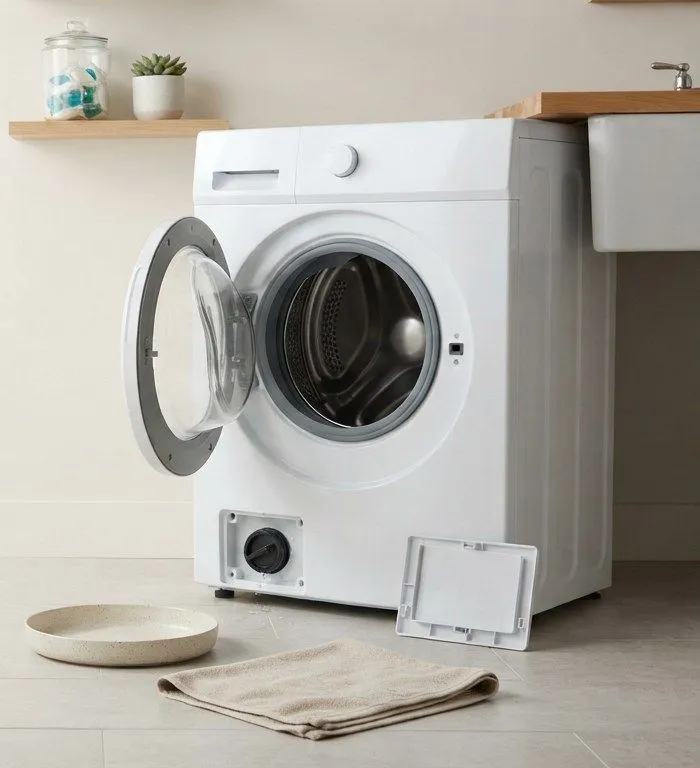
Most washers give a warning before they stop for good. Clothes come out of gray water, the door won’t open after the cycle, the spin starts to grind or the whole machine shuffles out from the wall. San Jose Appliance Care books washing machine repair in San Jose on top-loaders with or without an agitator, front-loaders, stacked laundry centers, all-in-one washer-dryers and Wi-Fi models, including direct-drive and inverter-motor machines. A registered, insured tech tracks the symptom back to the worn part. On washers that’s most often the drain pump, the door lock or lid switch, the inlet valve, the suspension or the bearings behind the drum.
Where top-load and front-load washing machines break
Each design has its own weak points. Older agitator top-loaders lean on the lid switch and the transmission (some makers say gearcase), and many also use a motor coupling that links the motor to that transmission. High-efficiency top-loaders lock the lid whenever the tub spins or agitates. Whirlpool says each cycle opens with a self-test of that lock, and a lock that fails the test stops the wash before it begins.
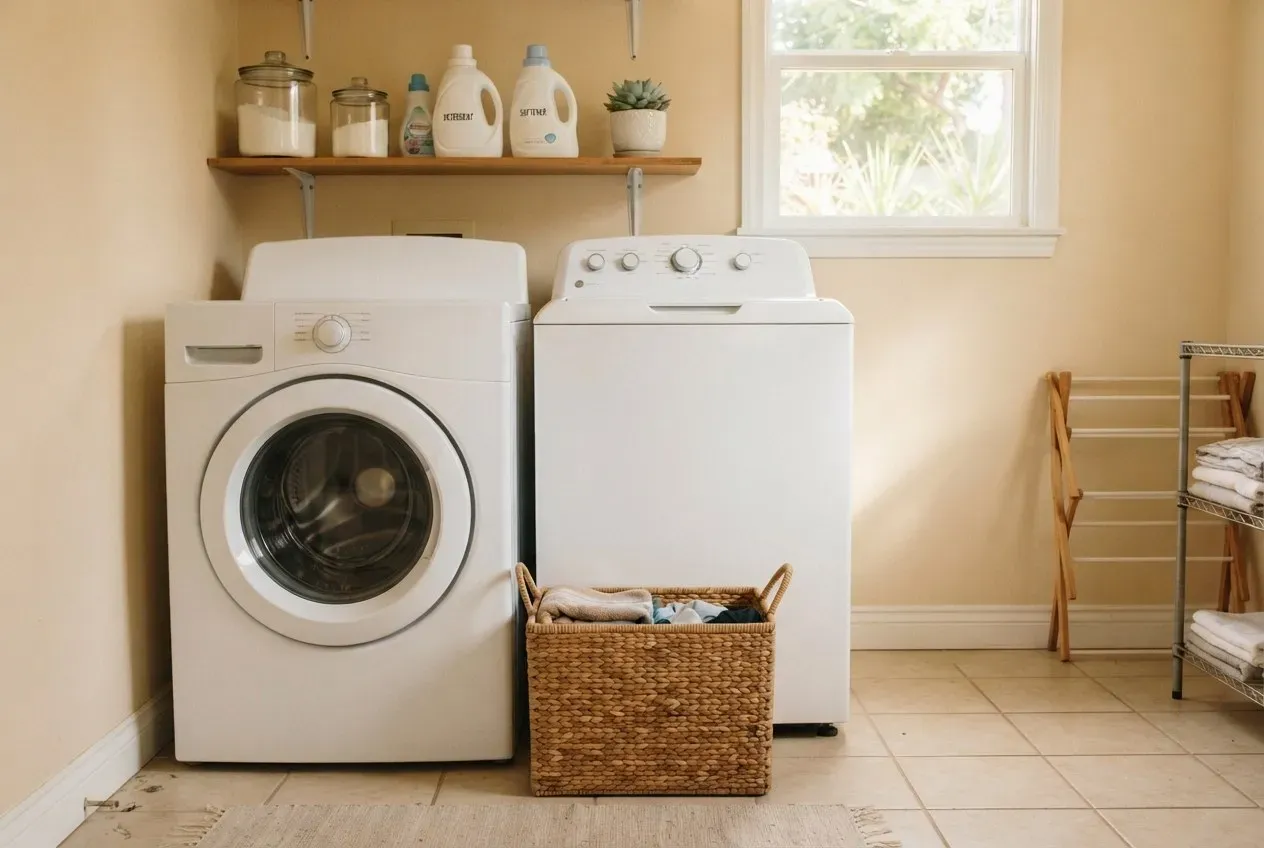
Front-loaders bring their own list. The door lock has to catch before the drum will move. A pump filter near the bottom traps lint, dirt and whatever small items got left in pockets. The rubber boot around the door opening can split and keep moisture in. The bearings sit behind the tub, and getting to them usually means taking the tub apart. Knowing the washer type, the brand and any display code lets the tech shrink the list before the visit.
Washer won’t start, has no power or the panel won’t respond
A dark panel points at power first: the outlet, a tripped breaker or GFCI, or the cord. A lit panel that ignores the start button points at the door or lid lock, which has to latch before any cycle begins, or at a control lock left on. Many machines lock their buttons with a press-and-hold combination, and a child lock looks a lot like a dead board. If the lock checks out and the panel still won’t answer, the control board or the user-interface board is next.
Burning smell from the washer
Stop the cycle, unplug the washer and keep it off until it’s been looked at. A hot-rubber smell usually comes from a belt slipping on a stuck drum or pulley. An electrical smell can be a motor overheating or a wire burning at a connector. Neither is something to run again to check. Tell us what the smell was like and when it started.
Washer won’t stop filling, or overfills
Water that keeps coming in after the tub is full, or a washer that fills while it’s switched off, usually means the inlet valve is stuck open. GE says an overflow during fill can also be the pressure switch or its sensor, which tells the control how high the water is. Turn off both supply valves behind the machine and call. If the tub overflowed, mention whether water reached the floor.
Gray water still in the drum
Water left after the cycle means either the water can’t get out or the pump isn’t moving it. The tech follows roughly the order Whirlpool uses in its own troubleshooting. That starts with a drain hose that’s kinked or plugged, then a standpipe shorter than 30 inches or taller than 96, then (on a front-loader) a pump filter full of lint. Heavy suds from the wrong detergent can also stop the pump-out and the spin.
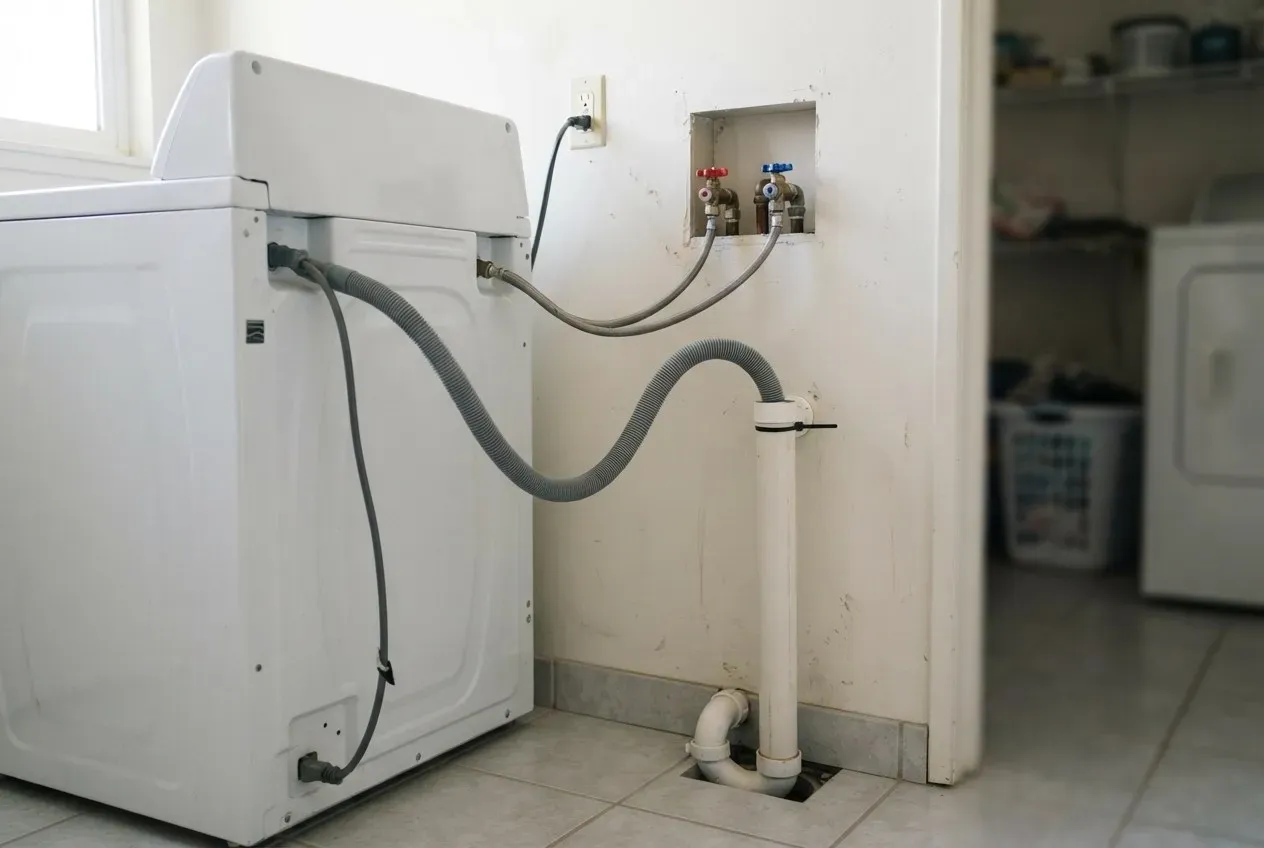
Once the hose, standpipe and filter check out, attention moves to the pump and the control that runs it. A pump that hums and moves no water, or stays silent, is the clue there. On a front-loader the door won’t open while the drum holds water. Whirlpool explains that the lock stays on mid-cycle in case the water is high, which is why a full tub and a shut door so often show up as one complaint. Mention on the call if there’s still water inside.
Clothes still soaking wet after the spin, or a motor that hums while the tub sits still
GE puts it plainly for top-loaders. When the water pumps out and the motor runs but the basket won’t turn, it’s a service call. The lid switch is a regular culprit on older top-loaders, since Whirlpool says the washer only runs with the lid closed and latched. If the switch stops sensing the lid, the machine won’t agitate or spin. A failing belt, coupling or motor control shows up differently: the motor turns over and the drum hardly budges.
A top-loader that fills and drains but won’t agitate is a close cousin. On agitator machines the coupling, the agitator dogs or the transmission are the usual suspects, and on high-efficiency top-loaders with a wash plate the lid lock and the drive are checked first.
Some slow spins have nothing to do with parts. A load that’s heavy or bunched to one side can stop the spin, and GE says packing the basket too full can rock the tub until the cycle shuts down. Gentle cycles are built to spin slower. If every load is still dripping wet, though, something inside has worn.
Squealing, grinding or banging on the spin
Banging on the spin, or a washer that moves itself across the floor, usually comes down to tired suspension. On most machines that’s the shocks, the dampers or the rods that hold the tub level. A grinding rumble that gets louder as the spin speeds up is a bearing sign.
Bearings on an aging front-loader are usually where people decide between fixing and replacing, since the tub has to come apart to get at them. Describe the sound when you call. A thump on every rotation, a steady roar and a squeal right as the spin starts each send the tech toward a different part.
Water at the front or back, or a musty door
The spot where water collects gives the tech a starting point. Under the front of a front-loader, it’s usually the door boot or the door. Behind the washer, check the fill hoses, the inlet valve and the drain hose. A slow drip under the middle of an older machine may be the pump or the tub seal.
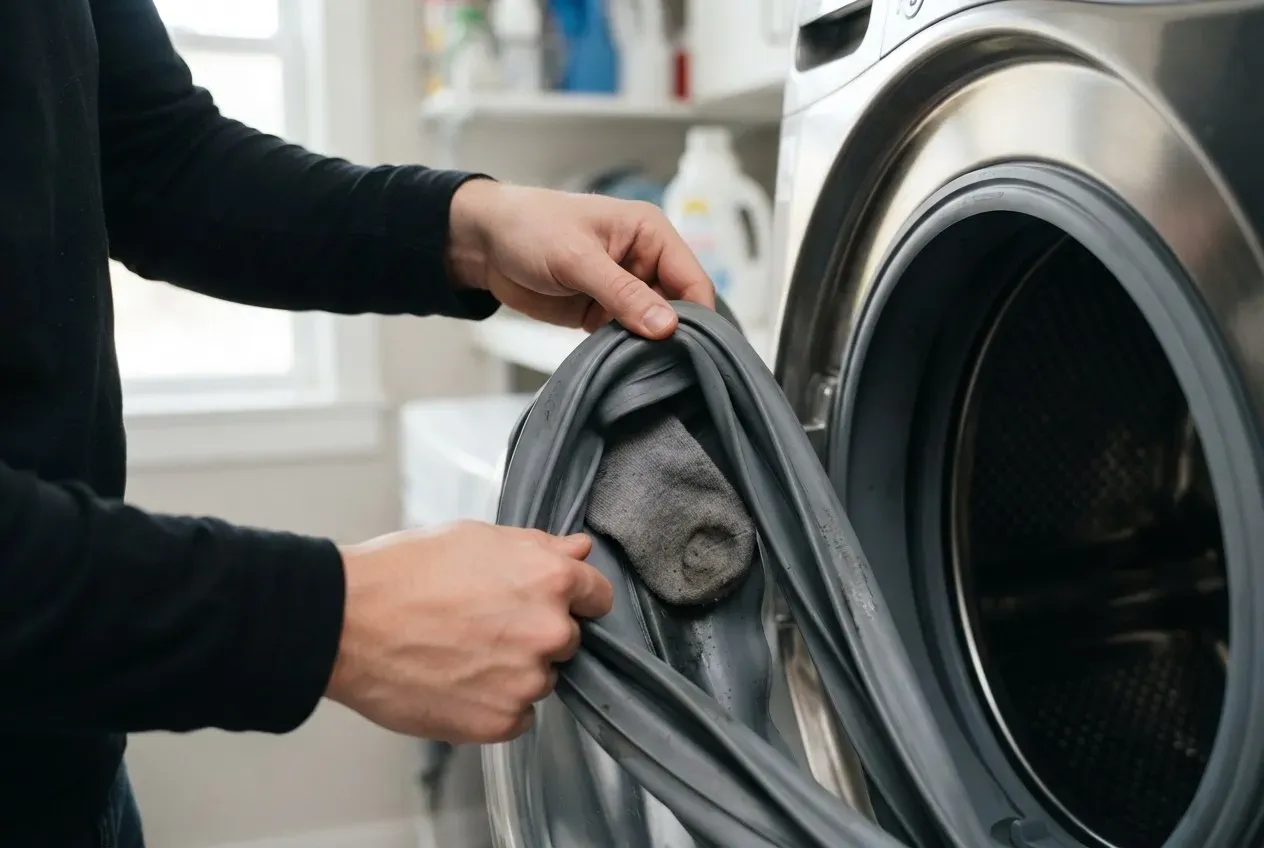
A sour, musty smell usually comes from water sitting in the door gasket. LG and Samsung both put it down to damp and leftover detergent collecting in the gasket, the dispenser drawer and the tub. If the gasket is torn, or mold has gotten into the tub seal, it needs a repair, and the tech can say which part is involved.
Stacked closets, garage hookups and shared laundry rooms
Washers around San Jose live in all kinds of spots. Some sit in a house’s garage on a standard hookup, some are stacked in a townhome hallway closet, and some share a laundry room in an apartment building. Let us know your setup. A stacked pair sometimes has to be separated for a repair, and a tight closet makes pulling the washer forward slow, so extra time gets booked.
The same service handles washer repair in Milpitas, Fremont and Santa Clara, and in Sunnyvale, Mountain View, Palo Alto, Cupertino and Los Gatos too. If your dryer has problems as well, mention both on one call. Heat and venting faults are covered on the dryer repair page.
Washer repair price by part, and older machines
A door lock or lid switch is one of the cheaper fixes. A drain pump costs more. Bearings, a transmission or a control board cost the most, since those jobs eat the most labor. Stacked and closet installs add time. If a part has to be ordered, the same tech orders it and comes back to fit it. You get the price in writing first, and you only pay for work you agreed to.
Whether to repair depends on the washer’s type and age. Replacing the lid switch on a top-loader that’s ten years old usually makes sense. Replacing the bearings on a ten-year-old front-loader often doesn’t. The repair or replace guide goes through that decision, and typical costs per repair are in the appliance repair cost guide.