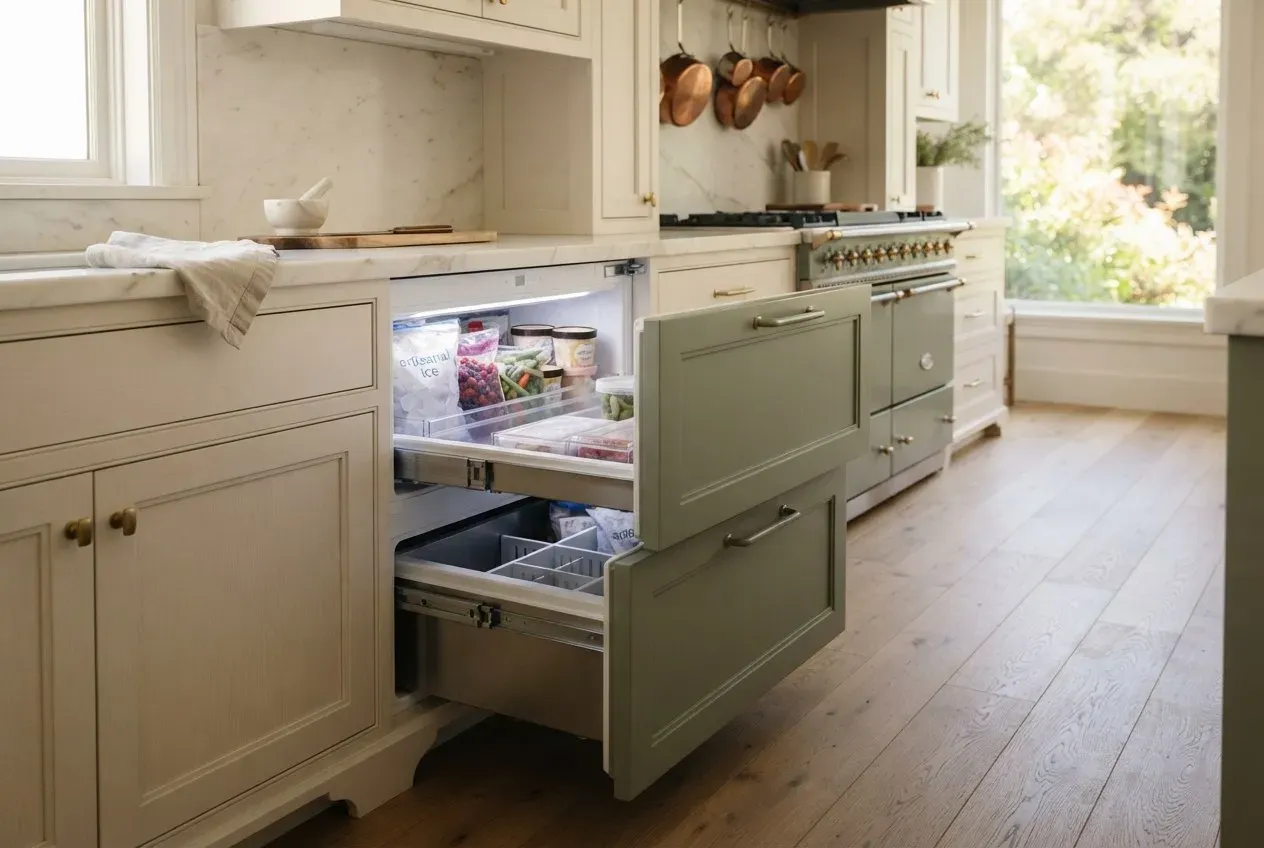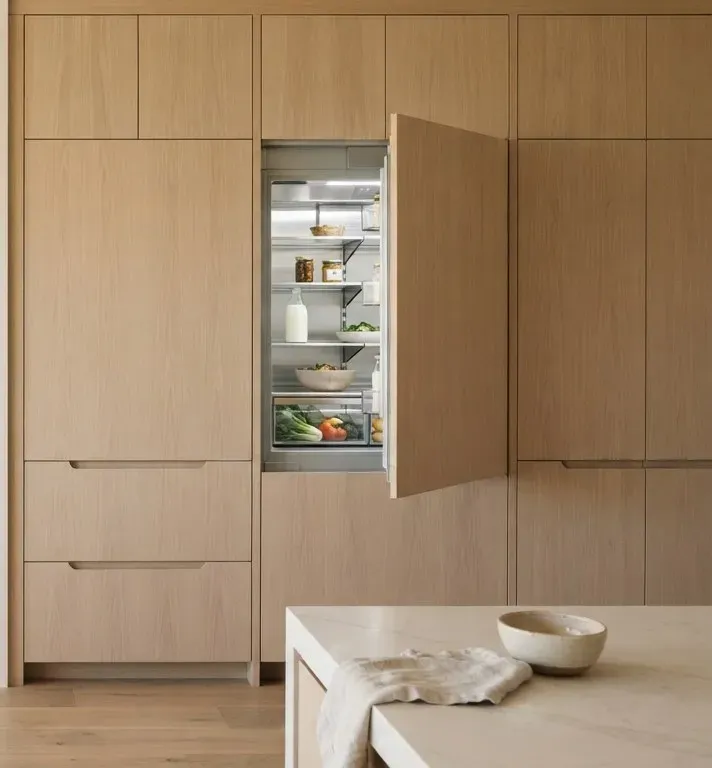
San Jose Appliance Care takes Sub-Zero repair calls across San Jose for Classic and Designer built-ins, PRO models, integrated columns, undercounter refrigerators, ice makers and wine storage. The serial tag tells the tech which line it is: BI and CL models are Classic built-ins, while IT, IC, DET and DEC models are Designer (once called Integrated) tall units and columns, and plenty of kitchens still run a 500, 600 or 700 Series. Which zone is warm, what the display says and roughly when the unit went in shape the rest of the visit. With those, a registered, insured tech can narrow it to an evaporator fan, a sensor, a dusty condenser or the sealed system before a panel comes off. We take the same calls for Sub-Zero kitchens in Los Gatos, Palo Alto and the other cities around San Jose.
Sub-Zero not cooling: refrigerator side above 48°F
Sub-Zero hands owners a clear threshold. When the refrigerator side reads above 48°F with the control at 38°F, Sub-Zero says cleaning the condenser probably won’t recover it. That’s a repair, and the tech goes beyond the condenser to the fans, the temperature sensors and the sealed system.
Sub-Zero asks owners to note which zones are warm and which are holding, since that split helps isolate the fault. Have a few other details for the call too: when the condenser was last cleaned, any message on the display, and whether the trouble began after a power outage.
Some models put Vacuum Condenser on the screen. Sub-Zero files that message alongside a unit that runs nonstop or runs warm, and if the temperatures haven’t come back to setpoint within 24 hours of a cleaning, it wants a service visit. Symptoms Sub-Zero shares with every other brand are covered under refrigerator and freezer repair.
Blinking Service icon with EC40 or EC50
EC40 with a flashing Service icon is the freezer side: Sub-Zero gives three possible causes, the freezer compressor running too long, a door left ajar, or a fault in the sealed system, a fan or a temperature sensor. EC50 is the same alarm for the refrigerator compressor, and when the temperatures are high, Sub-Zero says a door left open is unlikely to explain it.
Sub-Zero uses 10 degrees as the cutoff. Under that much above the setting, the condenser is the likely cause. Over it, with every door shut, the unit needs a proper diagnosis.
Leave the code where it is while the temperatures are off. Sub-Zero asks owners not to clear EC40 or EC50 unless things are close to normal, because the tech needs the error the control recorded. If the code or the Service light keeps coming back, jot down the reading in each zone for the call.
On 600 and 700 Series units, a few codes have no owner step at all. EC05 and EC07 mean the refrigerator or freezer temperature readings have gone erratic, and EC06 and EC08 mean the evaporator sensor on that side is open or shorted. Each of those is a sensor and wiring test, so read the code to us exactly.
Frost on the back wall, or water under the crisper
Frost building on the back wall of the refrigerator comes from a short list in Sub-Zero’s own troubleshooting: a gasket that isn’t sealing, air leaking in, an air circulation fault, a clogged drain tube or a sealed-system problem. If it comes back after a defrost and a condenser cleaning, Sub-Zero treats it as a repair.
Water or ice under the crisper drawer is usually the drain trough or drain tube along the back wall. Food debris or ice blocks it, and the defrost water backs up into the cabinet instead of reaching the pan. On the visit the tech clears the drain and then looks for why it froze, since a drain that ices over can point to a door that isn’t sealing or temperatures that are off. Mention whether the frost or the water came first.
Running nonstop, buzzing or clicking
A Sub-Zero that seems to run all day isn’t always faulty. Sub-Zero doesn’t set a run time, because the room temperature, how full the unit is, how often the door opens and how warm the food was all change it. Dual-compressor models can run both compressors together or one after the other, which can look like the unit never stops.
If the unit keeps running after it’s switched off at the control panel, or the inside is getting very cold, Sub-Zero points to a relay stuck on, and that’s a service call. A condenser that’s gone a year or more without a cleaning also makes the unit run longer and louder.
Sub-Zero lists buzzing, clicking, humming, rattling and fan noise as normal sounds, and the ice maker clicks or grinds every two to three hours as it harvests. What isn’t normal is a new noise, one that gets louder over time, or one that keeps up after the condenser has been cleaned. A defrost timer you can hear clicking through the grille also needs a look. Describe the sound and where it seems to come from when you call.
Door not sealing on a built-in
A Sub-Zero door that won’t close or seal usually has something holding it open: a shelf item sticking out, a torn or bulging gasket, or a broken hinge part. Sub-Zero recommends that a technician replace door and drawer gaskets rather than the owner. On a new install, the unit also has to sit level, and on Designer units fitted side by side with the dual installation kit, the supplied handle trim is what lets the doors close.
A door that feels easy to pull open isn’t a fault on its own. If the gasket is intact and there’s no warm zone, frost or sweating, Sub-Zero says the seal is doing its job.
Sub-Zero ice maker not making ice
Sub-Zero’s list for an ice maker that stops starts with a cube jammed in the mold, low water pressure, a frozen fill tube, a freezer that’s too warm, or a water valve held open too long. The freezer needs to be at 5°F or colder, and Sub-Zero recommends 0°F. A new install can take 24 hours to drop its first cubes, so a unit only a day old may simply need time.
Say on the call whether the freezer itself is cold, whether you hear the water valve fill, and when the water filter was last changed. Hard water scales up fill parts here, and our ice maker repair page has the local water figures and the parts the tech checks on any brand.
Wine storage or undercounter unit drifting off temperature
A Sub-Zero wine unit is allowed to drift a little. Sub-Zero calls swings of about 5°F either way normal, and a new unit can take 24 hours to settle while it cools one zone at a time. Loading a case of warm bottles also raises the temperature for a while. The electronic setpoint runs from 34°F to 65°F, and the unit does best in a room between 60°F and 90°F.
Codes narrow it down. On 400 Series wine storage, EC10 is the warm alarm for the upper cabinet and EC12 for the lower. Designer wine units show 40 1 09 or 40 2 09 when zone 1 or zone 2 is too warm or too cold. If the swings keep going, Sub-Zero names a failed fan, a sensor, a door seal or the sealed system as the likely cause, and the tech checks them in that order. Tell us the model and which zone is off.
Warm readings traced to the sealed system
The sealed system is the closed refrigerant loop made up of the compressor, condenser, evaporator, drier and the tubing that joins them. A repair means opening that loop, recovering the refrigerant, swapping the failed part and recharging. These are the same parts Sub-Zero covers longest under its warranty.
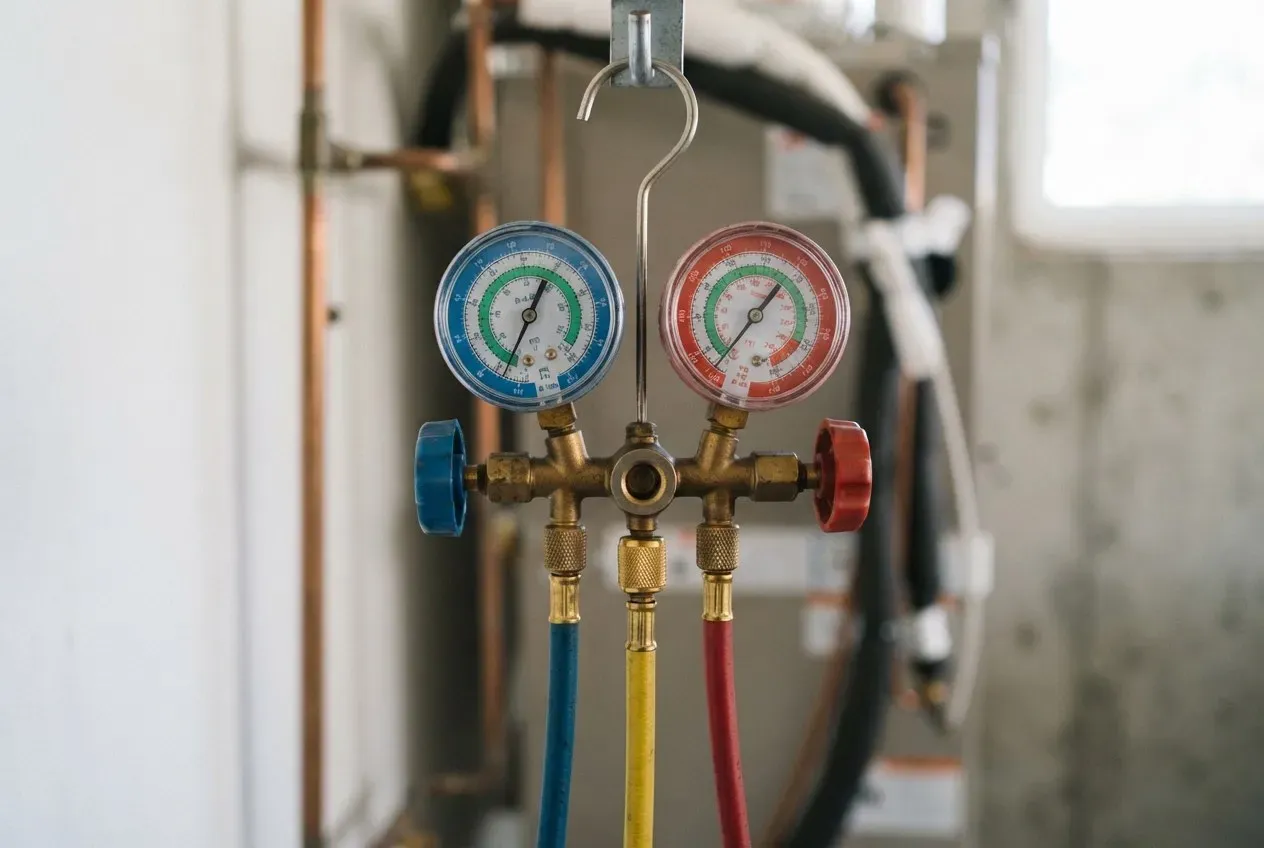
There’s no flat price for it. The number shifts with the part (a compressor runs more than a drier), how deep the unit is set into the cabinetry, the hours for recovery and recharge, and whether the part is on order. The tech writes the price down for you before the loop gets opened, and you only pay for work you agreed to. Our appliance repair cost guide breaks down what drives refrigeration repairs up. If every warranty term has run out and the figure is big, the repair or replace guide helps you weigh it.
Still covered? Sub-Zero warranty by part and year
It depends on which part failed and when the unit was installed. Sub-Zero counts each term from the original installation date, so a house you bought last year may hold a Sub-Zero with little or a lot of coverage left.
| Period | Coverage |
|---|---|
| Years 1 to 2 | Parts and labor on any part with a defect in materials or workmanship (a third year if it went in through Sub-Zero’s factory installation program) |
| Years 1 to 5 | Sealed-system parts and labor: compressor, condenser, evaporator, drier and connecting tubing |
| Years 6 to 12 | Those sealed-system parts, parts only |
| First 60 days | Cosmetic flaws on stainless doors, panels and handles |
Water filters and air purification cartridges are replacement items outside the warranty. If the Sub-Zero might still be inside one of these windows, mention it on the call. A Wolf range in the same kitchen has separate terms, laid out on our Wolf repair page.
Panel-ready doors and flush columns change the access
A flush built-in doesn’t make the fault harder to find, but it changes how the tech gets to it. Panel-ready doors and drawers wear cabinet fronts, integrated columns sit tight against the boxes beside them, and each Sub-Zero line reaches its condenser a different way. On the 600, 500, 200 and 300 Series, the path is through the louvered grille, which lifts off with the doors open.
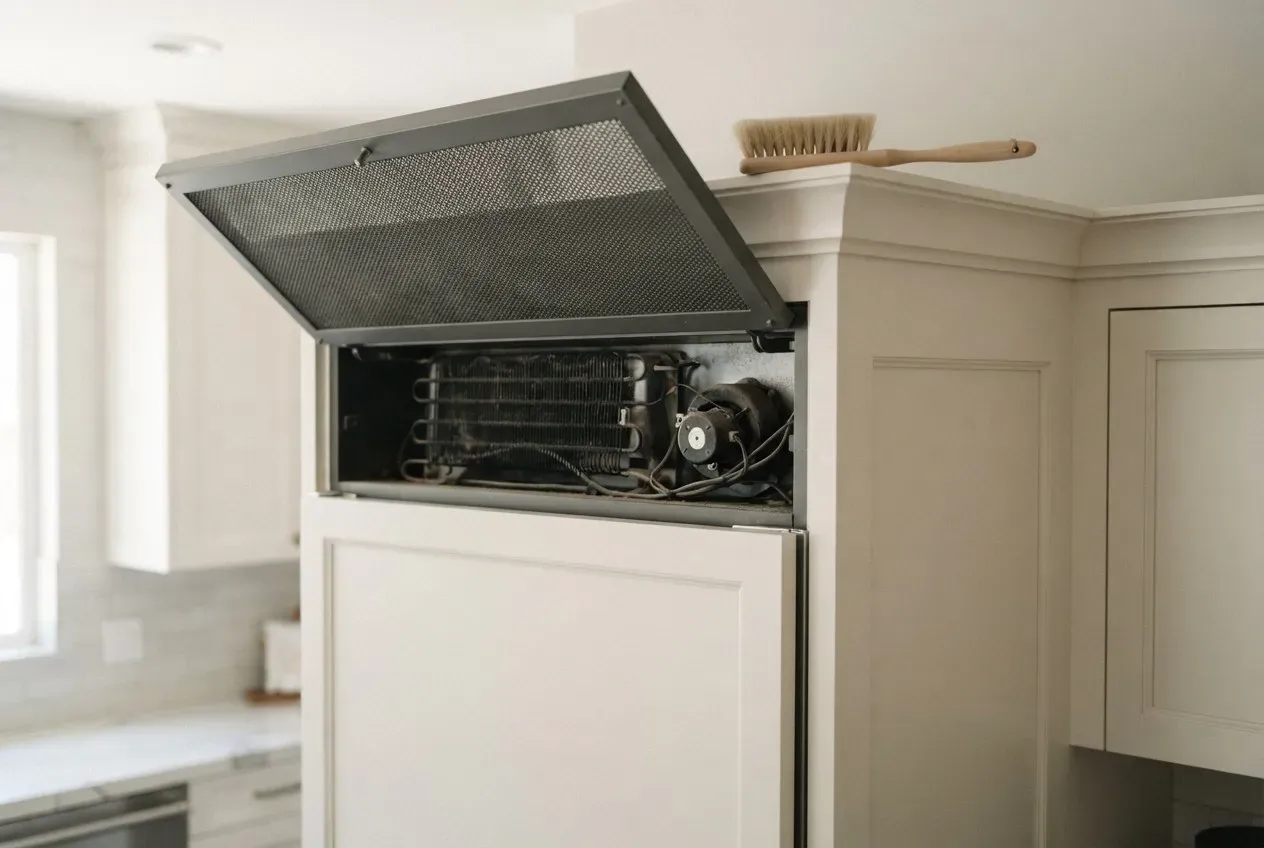
Sub-Zero wants the condenser cleaned every six to twelve months, and more often in a house with pets. Skip it and Sub-Zero warns of temperature loss or mechanical failure. A built-in that’s gone years without a cleaning is a different job from one done last spring, so let us know which yours is.
A built-in in an older house went in with a remodel, and the South Bay has plenty of older houses. In Cupertino, for one, most homes date from the three decades after 1950. Remodels are where the 700 Series gets caught out. Sub-Zero says the kickplate must never be fully covered by a custom toe kick or closed in by cabinets, and the Designer column pages give the same warning. A unit can run that way for years and still develop faults, up to a failed sealed system. If the toe kick or the cabinets around the unit changed in a remodel, bring it up when you call.