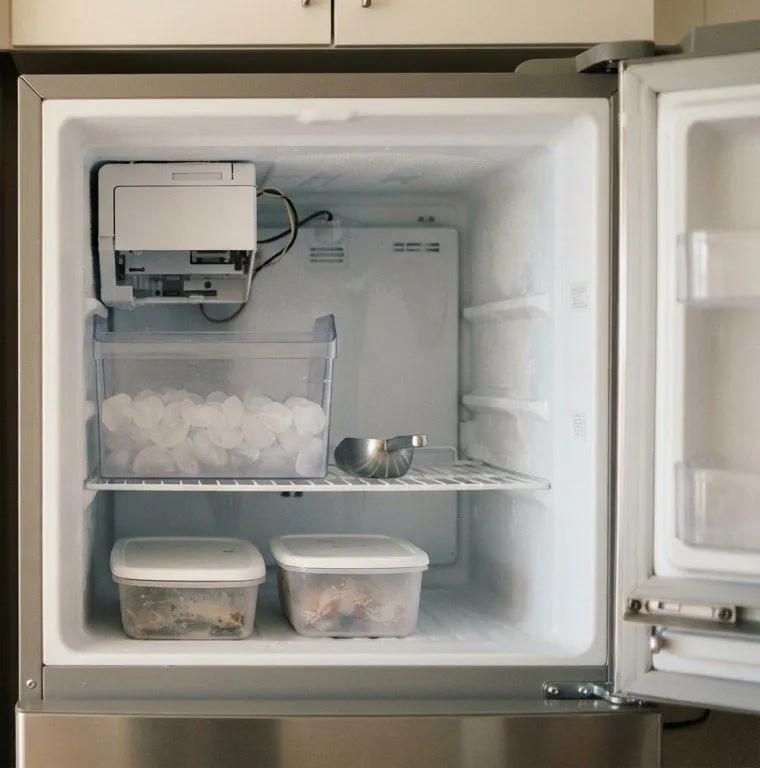
San Jose Appliance Care books ice maker repair in San Jose wherever the ice maker happens to be. It might hang in the freezer of a top-freezer or side-by-side fridge, or sit in its own compartment on the fresh-food side of a French-door model. Others live in a built-in column or stand alone under the counter. A registered, insured tech handles each kind. They all make ice the same way. Water comes from the house supply line to an inlet valve at the rear of the refrigerator, rises through a fill tube into the mold and freezes. Then the ice maker ejects the cubes into the bin and pauses once the bin fills. GE puts a healthy ice maker’s output at about 4 pounds of ice a day. The door dispenser taps that same supply but uses only some of the same parts. Whether it still pours water tells the tech which side of the system to open first.
Ice maker not making ice, but the door still pours water
A dispenser that still pours proves the house pressure, the filter and the supply line are fine. That puts the fault past the valve, somewhere on the way to the mold. Before any parts come out, the tech rules out two easy ones. The ice maker may be turned off at the control panel. Or the wire arm that senses a full bin (GE’s name for it is the feeler arm) may be stuck up, which stops production as if the bin were already full.
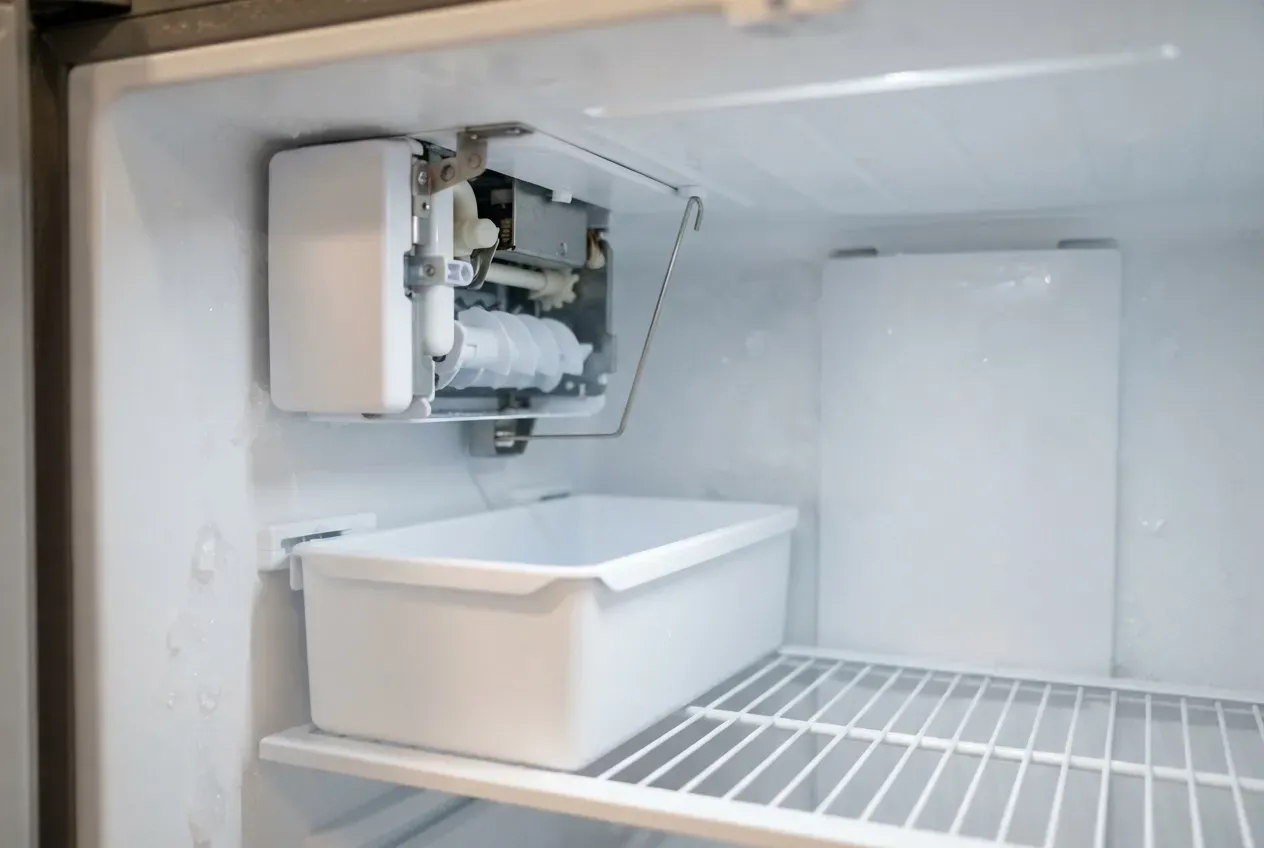
Next the parts get tested. Ice can form inside the fill tube and plug it so no water gets to the mold. GE calls that uncommon and says a tech has to take the ice maker out to be sure, since a frozen tube doesn’t stop the dispenser. If the tube is clear, the suspects are the inlet valve’s ice maker side and the ice maker module itself. The module is the whole unit with the motor, the mold and the ejector arms.
No water at the door and no ice either
If the dispenser is dry too, the problem sits before the split, in the supply line, the filter or the inlet valve. The line gets checked first. Whirlpool warns that a fridge pushed hard against the wall can crimp the water tubing, so tell us if it was recently moved or slid back into place.
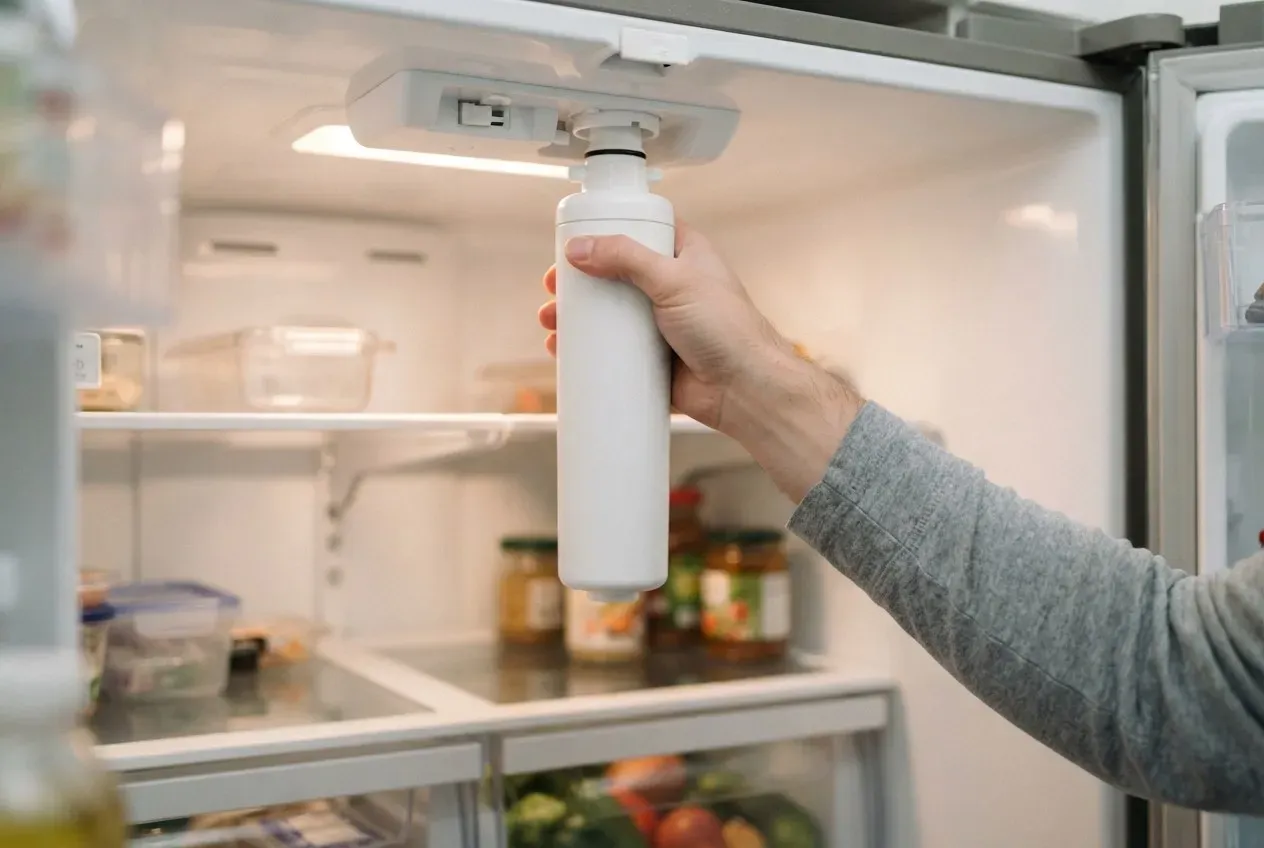
Then the filter. Whirlpool calls for a fresh cartridge every six months, or sooner if the indicator lights up. A cartridge that’s clogged or not seated right restricts water to the ice maker. Have the date of the last change ready, and say if the ice stopped just after one. When the line and filter pass, the inlet valve is next, and the tech checks that it actually opens on the ice maker’s signal.
Small, hollow or clumped cubes
Thin or hollow cubes usually trace back to weak water pressure. Whirlpool’s fridges are built for 30 to 120 psi, with the sweet spot at 40 to 80. Under that, water trickles into the mold and the cubes freeze thin.
Under-sink reverse osmosis is a frequent reason for low pressure at the fridge. Whirlpool’s number for RO water arriving at the inlet valve is 40 to 60 psi. GE asks for three things before RO water feeds one of its ice makers. It wants 40 psi or more at the RO unit, an extra storage tank, and no copper line anywhere from the RO system to the fridge. If ice output dropped after RO was put in, say so, and the tech looks at the supply before the ice maker.
When cubes stick together in clumps, temperature is the more likely cause. LG says a freezer door that’s open or not sealed lets warm, humid air in, the ice softens and the cubes fuse. A freezer that runs warm does the same thing. The tech checks the door seal and takes the freezer temperature before faulting the ice maker.
Ice maker leaking, or ice building up near it
Leaks at an ice maker most often begin where the water enters. GE points to three causes: a water valve that leaks, water getting out at the fill tube extension, and a fridge that isn’t sitting level. On the call, say where you find the water. A puddle on the kitchen floor, a frozen patch on the freezer floor below the unit and a solid block in the bin each lead to a different spot.
Grinding or clicking with no ice coming out
A quick click or hum now and then is the water valve opening, and GE lists that among the normal sounds of an ice maker. A click that repeats over and over with nothing landing in the bin is different. It usually means the ice maker is trying to run a cycle and something is stopping it, often cubes frozen in the mold or the ejector arm caught on ice.
A grinding sound when you press the paddle comes from the dispenser side. The auger motor turns a spiral that pushes ice out of the bucket, and GE’s rule is that a dispenser still stuck after a minute needs service. Say which noise you hear and whether it happens at the ice maker or when you dispense.
Ice jammed in the dispenser chute
Clumps cause most jams. GE says the weight of a full bucket can fuse the bottom cubes together when ice goes unused, and the clumps won’t feed through the chute. Bagged ice or tray ice added to the bucket jams it too, and so does pushing a narrow glass into the paddle so ice backs up and freezes the chute door.
If the chute is still jammed once the bucket has been emptied and the clumps thrown out, or the chute door keeps freezing shut, the tech checks the auger motor, the chute door and the seal around it.
Won’t stop making ice, or the bin overfills
The ice maker stops when the feeler arm, or an ice-level sensor on newer models, tells it the bin is full. GE says a bin set in the wrong spot, or a shelf that isn’t installed right, keeps the arm from judging the level, and the ice overflows. On bottom-freezer fridges with the ice maker in the fresh-food side, GE notes the arm sits out of sight, so an overfilling bin there is a service call from the start.
Ice tastes or smells bad
Ice picks up odors from the freezer air, so old ice tastes like whatever else is in there. GE points to two sources: food in the fridge or freezer, and what’s in the water supply. An overdue filter adds to the second.
GE’s way to tell them apart is to freeze plain tap water in a tray and leave it in the freezer a few days. If the tray ice tastes off as well, the smell is in the freezer. If it doesn’t, the water path to the ice maker is the suspect, and the tech checks the filter and the line.
Built-in columns, undercounter machines and French-door compartments
Sub-Zero and the other built-in makers fit ice makers built around their own parts into their columns and built-in refrigerators. Standalone machines get the same care: undercounter ice makers from U-Line and similar brands, nugget ice machines, and bar or outdoor-kitchen units. Those units sit flush with the cabinetry, so getting behind one takes extra time. Give the brand and say it’s built in, and the visit is booked long enough for access. The fridge may have to slide partway out of finished cabinets, which is one more reason the tech on the job is insured.
On many French-door fridges from Samsung, LG and other brands, the ice maker sits in a separate little compartment in the fresh-food section. Tell us whether ice forms there at all, or forms and never reaches the dispenser. If the freezer itself has gone warm and the ice stopped with it, the job includes refrigerator and freezer repair, so bring up both.
A new ice maker assembly or one part
On most refrigerators the ice maker comes out and goes back in as one assembly. GE sells its icemaker as a kit that mounts inside the freezer, for example. That usually makes the choice one part versus a new assembly, such as an inlet valve or fill tube against a full module, rather than a repair versus a new refrigerator. A valve is the lighter job. A module costs more, and built-in brands and French-door compartments add time to reach.
When a part needs ordering, the tech places the order and returns to finish the job once it arrives. You see a written price before anything gets replaced, and you only pay for work you agreed to. If the fridge is getting old and has other problems, the repair or replace guide helps with that choice, and the appliance repair cost guide lists typical prices for ice maker and fridge work.
Ice maker repair around San Jose
Service reaches past San Jose to Palo Alto, Sunnyvale and Mountain View. Keep the fridge brand and model nearby, and describe whether the ice maker makes nothing, makes poor cubes or leaks.