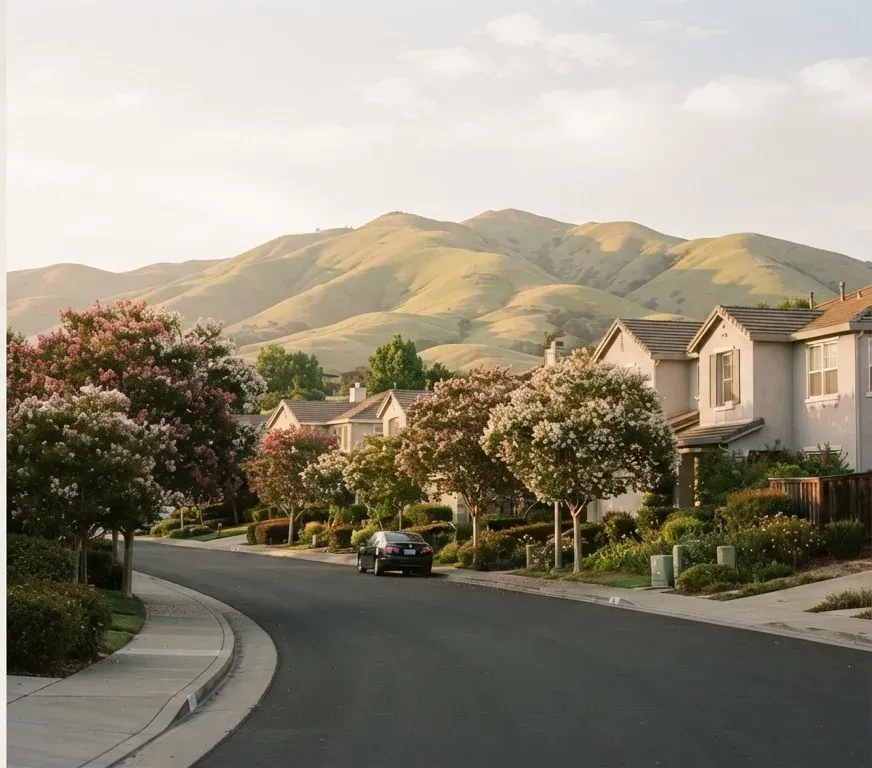
Fremont is across the county line in Alameda County, and its water comes from a different district than the supply Milpitas and San Jose use next door. San Jose Appliance Care takes appliance repair calls from 94538 and 94539 for fridges, laundry machines, dishwashers, ovens and cooktops, on brands from Whirlpool, GE and Frigidaire to Samsung, LG and Bosch. Most Fremont homes were built before 1990, many in the 1970s and 80s, and most are single-family houses heated with utility gas. That decides where the laundry stands, how old the hoses behind it are and whether the dryer and range burn gas or run on electricity.
Spots on air-dried glasses from ACWD water
The Alameda County Water District doesn’t send identical water to every street. Central and south Fremont drink treated surface water carried in by the South Bay Aqueduct, according to ACWD’s 2025 water quality report. Hardness there averaged 96 ppm, close to 5.6 grains per gallon, with individual samples between 77 and 120 ppm. Other parts of the district get blended or desalted water with a different hardness.
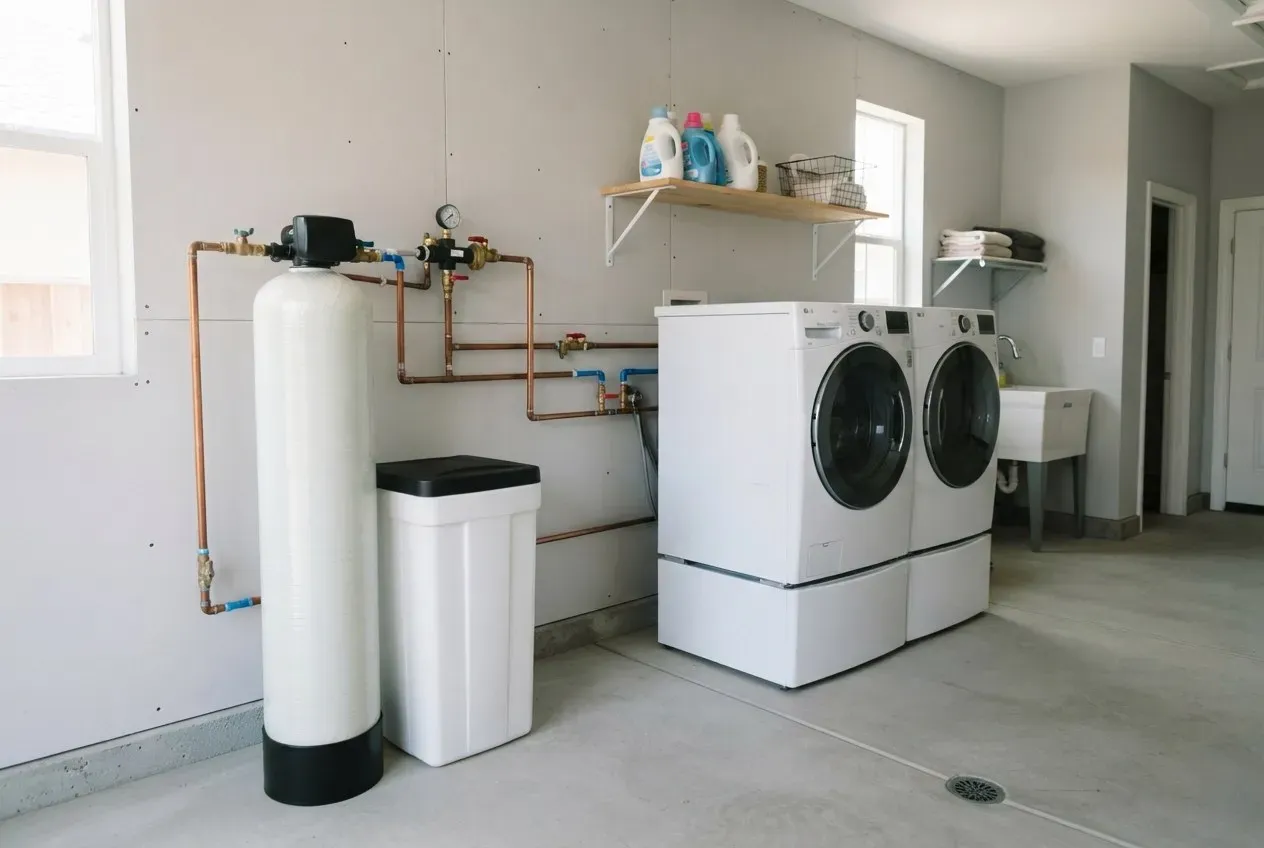
According to ACWD, harder water makes soap foam less and leaves air-dried glasses and dishes spotted. The white crust inside kettles and around faucets is calcium carbonate. Tell us how soon the film returns after a wash and whether water sits in the tub after a cycle. With that, the tech can separate mineral buildup from a wash pump or heater that’s failing.
Haze that won’t wipe off: scale or etching
Not every cloudy glass means scale. By GE’s grains-per-gallon chart, the 5.6-grain average for central and south Fremont counts as medium, a band running from 4 to 8. GE also says softer water needs less detergent, since too much can etch glassware. Check whether the haze rubs off or won’t budge. Mineral film and etching send the tech to different parts, and grit and drain trouble are covered on the dishwasher repair page.
Gas dryer tumbling but staying cold
Laundry in Fremont’s 1970s and 80s houses tends to be out in the garage, tucked in a hall closet or set up in a utility room. Say which, how much space there is to pull the machines forward and whether the dryer is gas or electric.
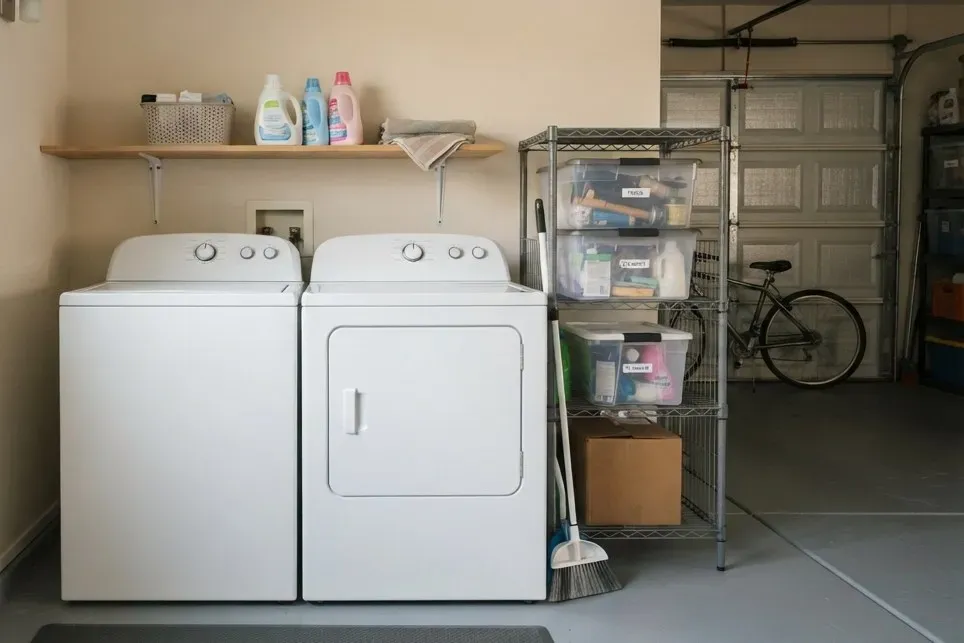
A gas dryer has parts an electric model doesn’t. GE describes the sequence on its gas models: roughly 15 seconds into the cycle a glo-bar igniter heats up, a sensor then signals the gas valve, and the valve stays shut if the igniter has failed. A gas dryer that spins with no heat can trace back to the igniter, the sensor or the valve. Naming the fuel lets the tech plan for the right parts.
Loads that need two cycles to dry
The vent run counts as much as the fuel. For a straight 4-inch rigid metal run, LG’s limit is 65 feet. Each 90-degree elbow costs about 6 feet, and four elbows is the most it allows, at which point the run tops out at 28 feet. Samsung says to use rigid metal rather than plastic or foil and to keep turns few, and notes that a clogged vent drags cycles out. A closet or interior laundry room usually means more duct before the air reaches outdoors than a dryer standing against a garage wall.
Tell us where the vent exits and about how many bends it makes. If the dryer heats but a load needs two cycles, Samsung points to the vent as the likely cause. Heat, drum and sensor faults are on the dryer repair page.
Washer leaking across the garage floor
Under an older washer, the drip usually traces to a supply hose, the fitting where a hose connects or the inlet valve inside the machine. If there’s water on the floor:
- Unplug the washer.
- Turn off the supply valve, but only if it moves without forcing.
- Then call with where the water seems to start.
Also say when it shows up: all the time, or only during the fill or the spin. That narrows the search before the tech arrives.
Washer won’t drain or won’t spin
A washer that stops with water in the drum and one that drains but won’t spin point to different parts. Not draining usually traces to the drain hose or the drain pump, and on a front-loader to a pump filter packed with lint. Won’t spin with the water gone points to the lid switch or door lock first. A load bunched to one side can stop the spin too, and so can a worn belt or coupling on an older top-loader.
In a garage from the 1970s or 80s, the drain hose often runs into the original standpipe or laundry tub, so say how yours is hooked up. The washer repair page goes through each of these parts.
Garage washer that won’t fill after a frost
GE says a washer should never be installed or stored where near-freezing temperatures can reach it, and it names the garage. The water valves can freeze or suffer permanent damage, and GE’s warranty excludes damage from running in freezing conditions. Winters here are mild. Even so, the 1991-2020 NOAA normals for Fremont’s station show a few nights each year reaching 32°F or lower. If a garage washer leaks or won’t fill after a cold night, mention when it began, and the tech checks the valves and hoses first.
What we ask when you call from Fremont
| We’ll ask | What it changes on the visit |
|---|---|
| Gas or electric | A gas dryer or range has an igniter, sensor and valve an electric one doesn’t |
| Where the machine stands | A garage, hall closet or utility room changes how long the visit runs |
| How old the hoses and valves are, if you know | Original hookups from the 1970s and 80s get checked before the machine |
| When the trouble shows up | A leak during the fill, the spin or all the time narrows the search |
From there we set up the visit. The tech diagnoses it at your house, and you see the written price before the repair starts.
Fremont ZIP codes and Milpitas next door
Fremont calls come from 94538, which takes in central Fremont and Irvington, and 94539, which covers Mission San Jose and Warm Springs. Don’t see your ZIP? Call anyway and we’ll check your address. Milpitas, over the county line to the south, has its own water setup, covered on the Milpitas appliance repair page. For San Jose itself and the wider South Bay, start from our San Jose home page.