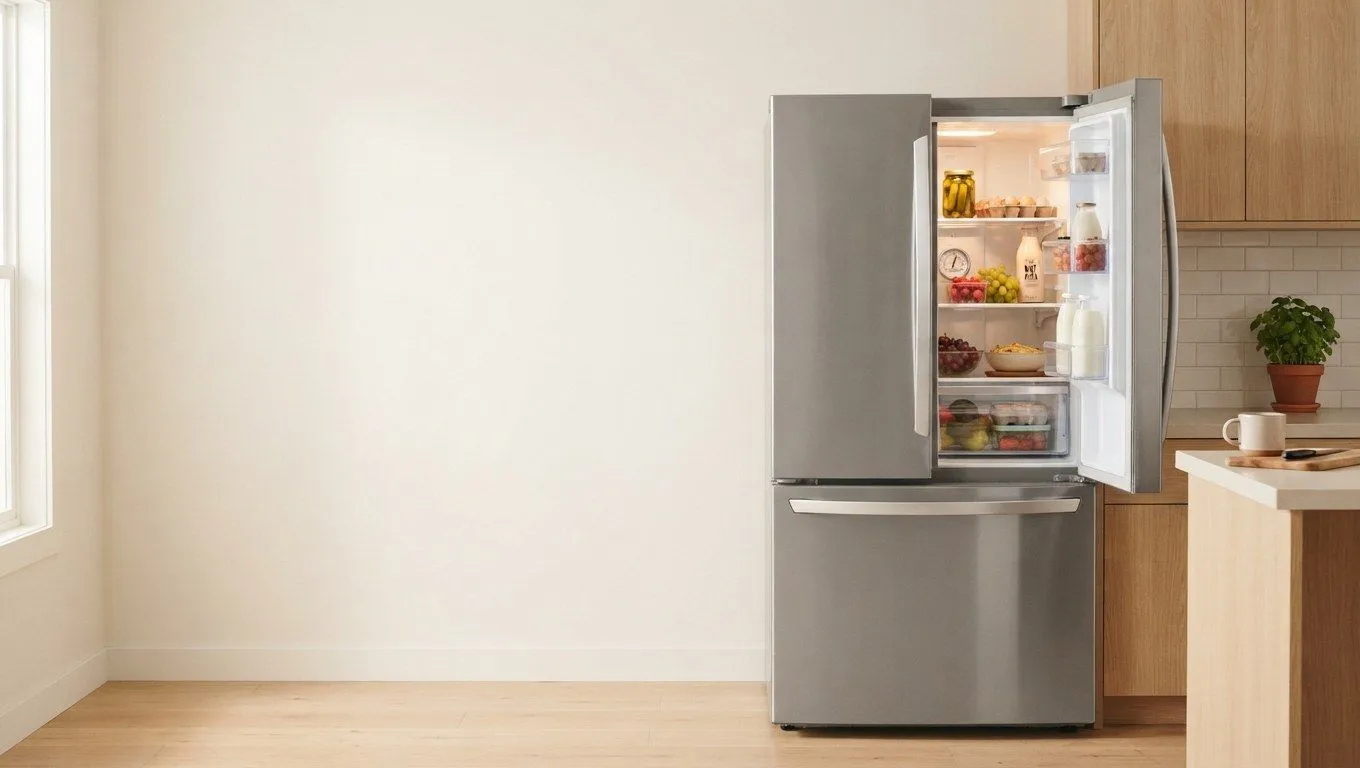
Most refrigerators that need repair haven’t stopped running. The shelves drift warm, frost builds on the freezer’s back wall or ice spreads under the crisper drawers. San Jose Appliance Care books refrigerator and freezer repair in San Jose for French-door, side-by-side, top-freezer and bottom-freezer models, built-in columns, wine refrigerators, beverage centers and the second fridge in the garage. A registered, insured tech follows the symptom to the part causing it, whether that’s an evaporator fan, a defrost heater, a start relay, a plugged drain tube or the compressor. The part that failed sets most of the price, which the cost section below breaks down.
Refrigerator not cooling but the freezer is cold
Start looking in the freezer. An auto-defrost fridge makes all its cold at the evaporator coil behind the freezer’s back panel, and a small fan blows some of that air down a duct to the fresh-food shelves. If anything along that path fails, the freezer can sit near 0°F while the milk goes warm.
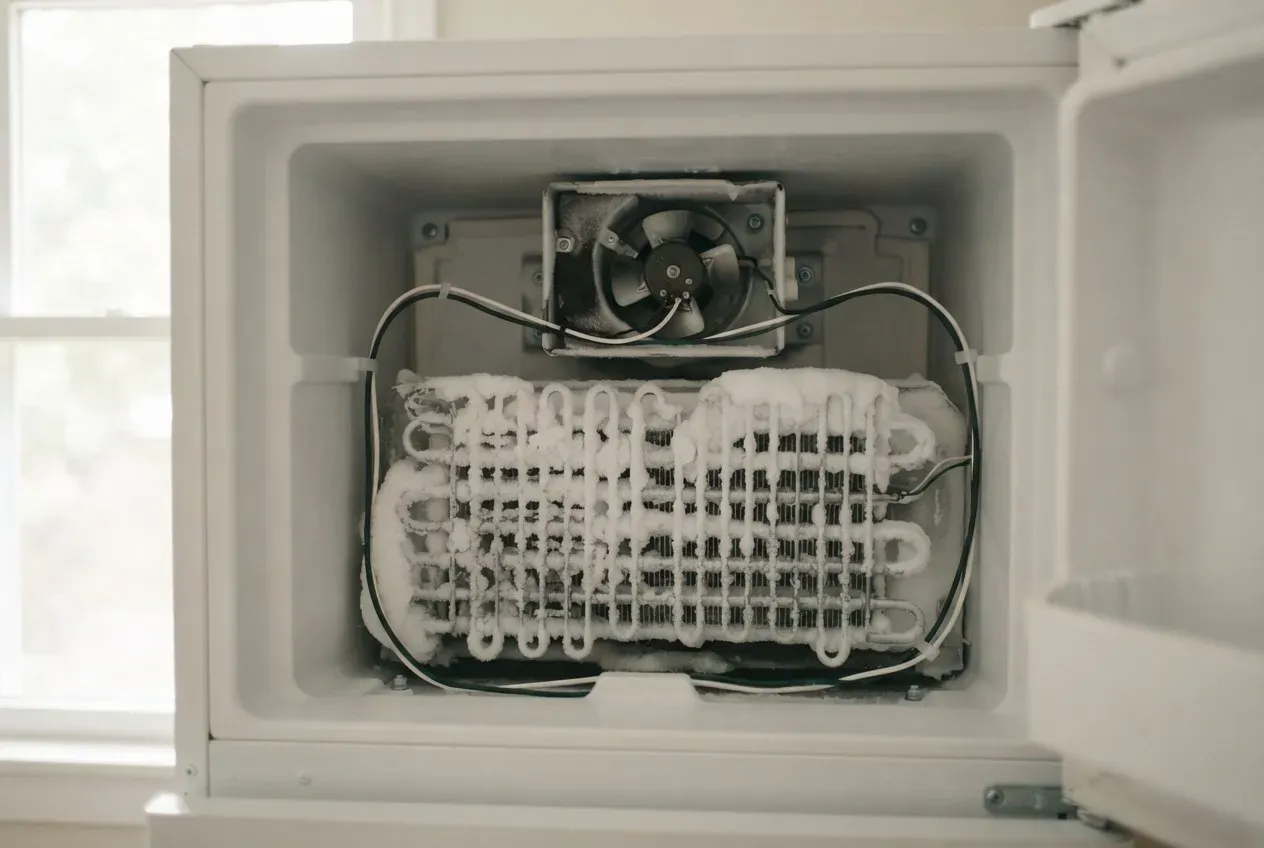
A frosted-over coil is the usual cause. On GE models with timed defrost, a heater comes on every 8 to 15 hours to melt ice off the evaporator. If the heater or its control fails, frost keeps building until air can’t get through the coil at all. Whirlpool’s service bulletin for this symptom calls for a new control plus a full defrost of the evaporator, so the frost doesn’t return a week later.
From the front, a couple of other faults look identical. The evaporator fan can stop, which leaves the area behind the freezer panel silent while the compressor keeps humming. A freezer packed tight can also block the vents that feed the fridge side. When you call, mention whether you hear that fan and whether the warming crept in over days or happened overnight.
How long the food lasts once the cold stops
The FDA’s food safety guidance gives a closed refrigerator about 4 hours of safe cold after it quits. A full freezer holds for about 48 hours, a half-full one for about 24. The targets to measure against are 40°F or below in the fridge and 0°F in the freezer.
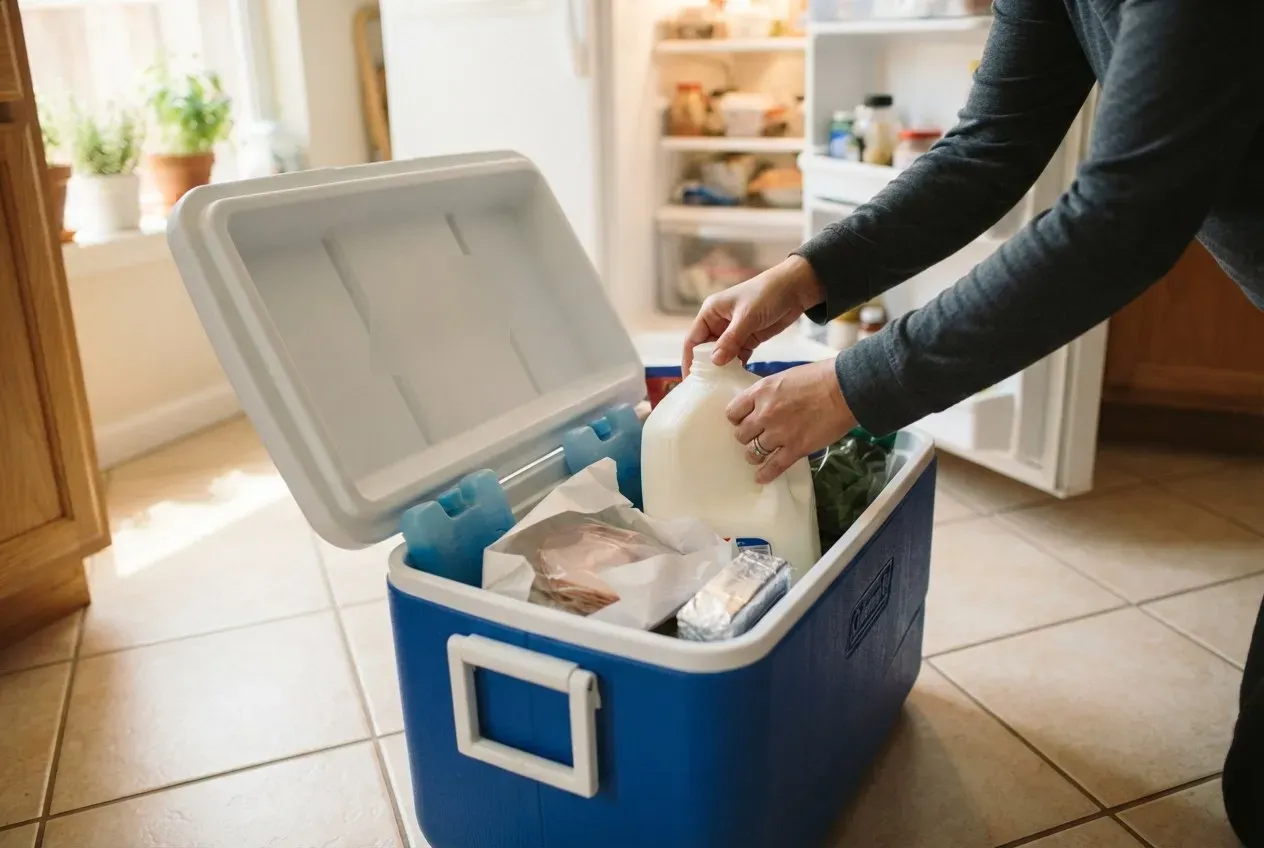
Perishables that spent 4 hours or more above 40°F should go in the trash. Smell won’t tell you which ones turned, but a thermometer will. Frozen food that still shows ice crystals or reads 40°F or colder can be refrozen. If the repair looks like it will take longer than 4 hours, move the fridge food into a cooler and leave the freezer door shut.
Garage fridge losing its cold in a heat wave
On September 6, 2022, San Jose reached 109°F, the hottest day on the city’s books. A garage on an afternoon like that is right at the limit of what a kitchen fridge is built for. Whirlpool rates its standard models for rooms from 55°F to 110°F and says a garage only fits that range when it’s insulated and climate-controlled. The hotter the room gets, the longer the compressor runs, and on the worst days it never catches up. GE’s Garage Ready models are tested from 38°F to 110°F, so they keep temperature in conditions where a kitchen model can’t.
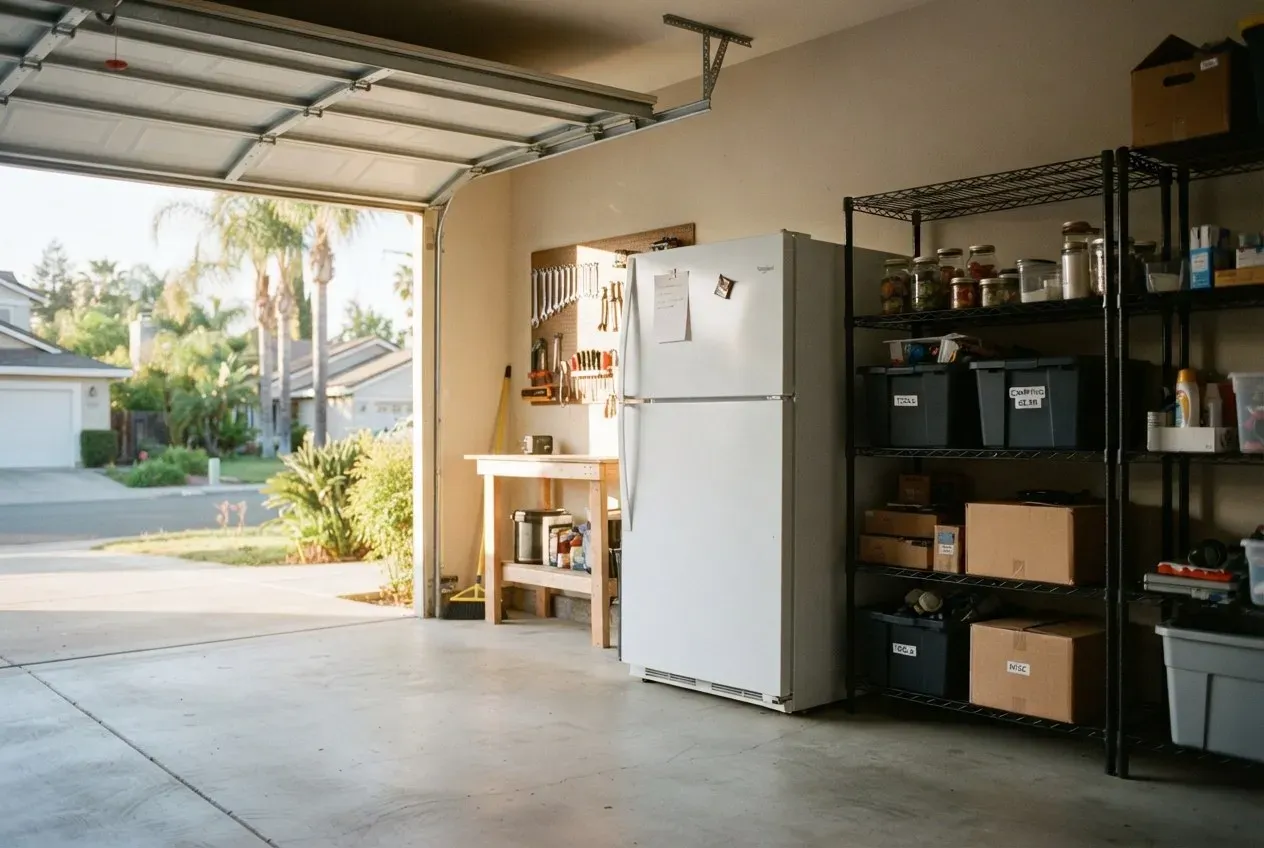
Before condemning a part, the tech checks what garage heat wears down first. That means dusty condenser coils, a condenser fan that’s slowed or quit, and boxes stacked tight against the cabinet. Whirlpool wants at least a quarter inch of clearance on the sides and top. It helps to know whether the fridge only struggles during hot spells and recovers overnight, because that separates a failing part from a unit pushed past its rating.
Fridge and freezer both not cooling, or a click every few minutes
If the fridge and freezer are both warm, the trouble sits further back, at the condenser and the compressor. Whirlpool lists the thermostat, start relay, start capacitor and defrost timer as parts that can stop the compressor from starting. Spend a minute listening before you call. A compressor that clicks on and off every few minutes without running usually points at the start parts or the condenser fan. One that runs constantly and still won’t cool points at the sealed system, which means a refrigerant leak, a restriction or a tired compressor.
On an older refrigerator, a sealed-system repair is usually the job that decides between repairing it and replacing it.
Fridge running constantly and never shutting off
A newer fridge that seems to run all the time may be fine. Whirlpool says its high-efficiency compressors run for long stretches at varying speeds, and a fridge that was just loaded with groceries or sat through an outage works hard for hours to catch up. A warm garage or a door left ajar does the same.
Constant running becomes a fault when it comes with frost on the back wall, sweat on the inside walls or food spoiling early. Whirlpool points at a torn or dirty door gasket and dusty condenser coils first, since both force the compressor to keep going. Rapid clicking from a compressor that starts and stops over and over is short cycling, and that one needs a visit.
Loud noise: buzzing, rattling or a fan that ticks
Some sound is normal. Whirlpool lists a hum from the compressor and fans, gurgling from refrigerant and defrost water, popping as the walls cool and a single click when the compressor starts or stops. A fan that ticks or squeals, a rattle that wasn’t there last week or a buzz that comes with warming shelves is different. The evaporator fan behind the freezer panel, the condenser fan underneath and the compressor mounts are where the noise usually starts, and ice building up around a fan blade is a common cause of ticking.
Fridge freezing food on the shelves
On most two-door fridges, a damper meters cold air from the freezer into the fresh-food side. GE notes that the area by that vent is the coldest spot on the top shelf, and that one step warmer on the fresh-food control is the first thing to try. If lettuce keeps freezing after the setting has had a day to settle, the damper, its control or a temperature sensor is likely stuck, and the tech checks those parts.
Control panel or display dead
A blank display with a fridge that’s still cold usually means the panel or its board has failed, not the whole unit. A blank display with no light and no cooling points to power first: the outlet, a tripped breaker or the control board that runs everything. Leave the doors shut and call. If the panel shows a code before it goes dark, write it down.
Water dispenser not working
When ice still drops but no water comes out, the water side has failed somewhere between the wall and the paddle. GE says a dispenser that won’t pour is often a frozen water tank or line, usually behind the crisper drawers, and that a crisper set to its coldest with little food in it can freeze the tank. A clogged filter, a kinked supply line, a failed inlet valve or a bad dispenser switch cause the rest. Tell us whether ice still works, since that splits the search in half.
Ice under the crispers or a puddle on the floor
A sheet of ice under the vegetable drawers usually means a plugged defrost drain. GE calls it the most common sign of a blocked drain tube in top-freezer models. Every defrost sends meltwater down that tube into a pan under the cabinet, and when the tube clogs or freezes the water backs up and freezes again inside. Getting to the tube means taking panels off, so leave it for the visit.
Water on the floor in front can come from that same drain, from a cracked drain pan, or from the water line and inlet valve that supply the dispenser. If the ice maker is the part acting up, the ice maker repair page covers that system by itself.
Built-in columns, wine fridges and panel-ready models
A Sub-Zero column, a panel-ready Thermador or Miele, or a Viking built-in sits flush with the cabinets behind custom door panels. Undercounter wine refrigerators and beverage centers sit in the cabinetry too, and a few degrees of drift matters more in a wine unit than in a kitchen fridge. That changes the visit, since the unit takes longer to reach and a part may need ordering. Mention the brand and that it’s built in, so enough time gets set aside.
If it might still be under warranty, say that on the call as well. Sub-Zero covers the sealed system for longer than the rest of the unit, and the Sub-Zero refrigerator repair page spells out the terms. Replacing a built-in means matching the opening and the door panels, which favors repair even on an older unit. If a code is on the display, jot it down and check the appliance error code library for what the maker says it means.
The part sets most of a fridge repair price
Most of the number comes from the part. A fan motor, defrost heater or water valve is a modest repair. A control board runs higher, and sealed-system work is the top of the range because it adds refrigerant, brazing and hours of labor. Built-in access and a part on order push any repair up. The appliance repair cost guide shows typical ranges.
The price is written out for you before the tech starts, and you only pay for work you agreed to. A fan or heater on a fridge in the middle of its life is usually worth doing, while a compressor on a fifteen-year-old top-freezer rarely is. For the full comparison, see the repair or replace guide.
Refrigerator repair beyond San Jose
The same booking covers refrigerator repair in Santa Clara, Sunnyvale and Cupertino, plus Mountain View, Palo Alto, Los Gatos, Milpitas and Fremont. Have the address, the brand and the model number from the label inside the door ready, and say whether the fridge is in the kitchen or the garage.