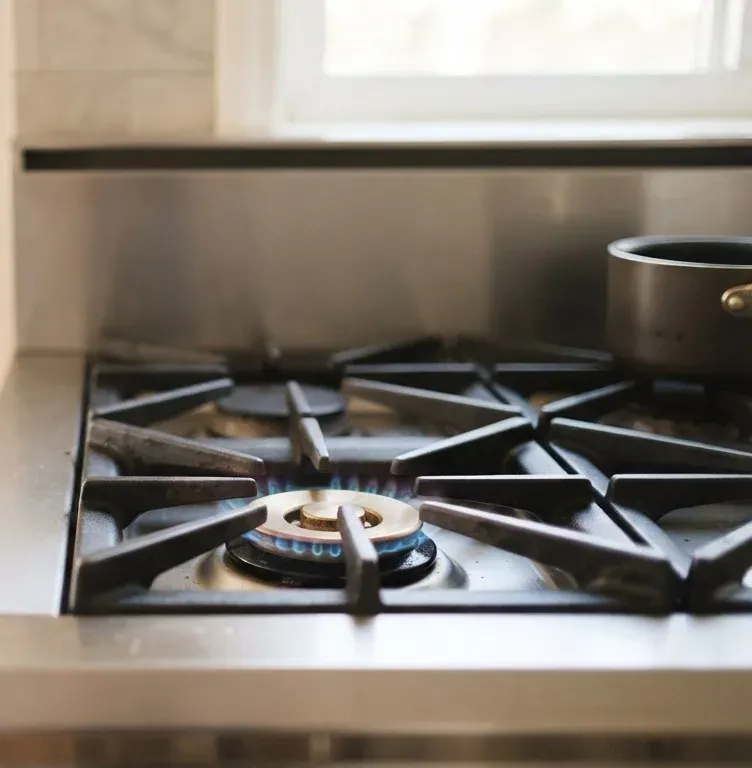
San Jose Appliance Care takes Viking appliance repair calls in San Jose, for kitchens where the Viking arrived with the house as well as ones fitted during a remodel. Calls cover Tuscany and 3, 5 and 7 Series ranges, 5 and 7 Series rangetops, wall ovens such as the 7 Series VSOF7301, the brand’s built-in refrigerators and its dishwashers. Start with whatever stopped working, be it a burner, the oven, the self-clean cycle, a refrigerator door or a wash cycle, and a registered, insured tech comes out with the model in hand. Owners in Milpitas, Fremont and the cities around them use the same number.
A Viking that came with the house
Viking coverage doesn’t stop with the first owner. Each new owner picks up the remainder of the original buyer’s term, though it only transfers through the sale of the home. With no original receipt and no registration on file, Viking dates the start from the production date coded into the serial number.
The usual start is the retail purchase date, or the closing date on new construction, and Viking uses whichever gives the longer term. Appliances sold through a building development follow another rule. There, coverage begins at the certificate of occupancy or 24 months after manufacture, whichever comes first. So a range held in a builder’s stock for a while may have less time left than the closing date makes it look.
| Period | Coverage |
|---|---|
| Years 1 to 2 | Full coverage across cooking, refrigeration, ventilation and dishwashers |
| Years 3 to 5 | Parts only on gas burners, electric elements, induction coils, magnetrons and hood or downdraft motors; on dishwashers, the electronic controls, wash motor, pump, wash arms, fill valve and any rack that rusts through |
| Years 3 to 6 | Parts and labor on the sealed system of built-in, integrated, freestanding, undercounter and wine units |
| Years 7 to 12 | Sealed-system parts, no labor, on built-in, integrated and freestanding units |
| First 90 days | Cosmetic flaws from materials or workmanship |
The longer burner coverage leaves out ignition systems, burner bases and burner caps, so an igniter that goes in year three isn’t included. If your dates still fall inside any of these terms, bring it up on the call.
Where the model and serial plate sits on a Viking
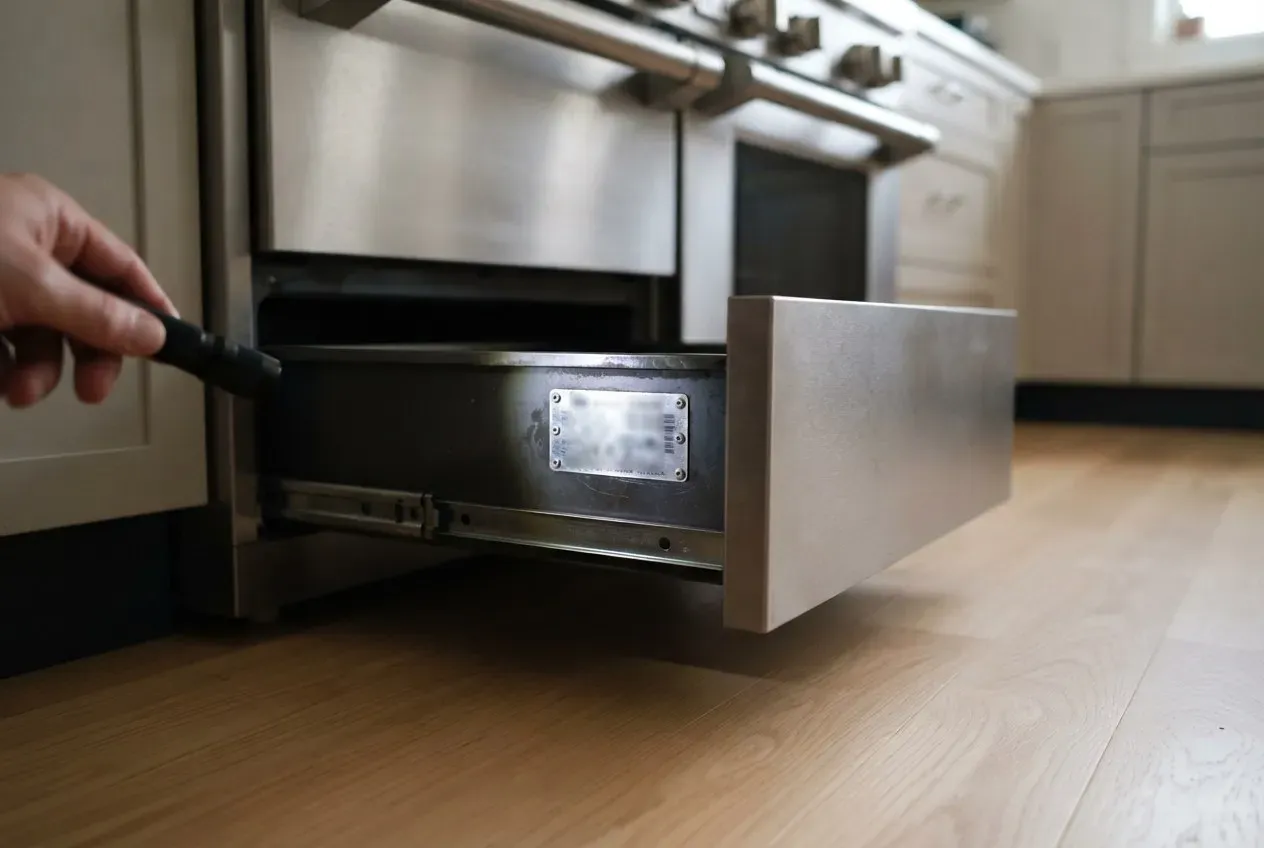
On a Viking professional freestanding gas range, the manual places the model and serial number under the control panel, readable with the oven door open. The first letters of the model number tell us what kind of unit it is before the visit. Viking’s owner FAQ gives range prefixes like VGR, VDR, VER and VIR, and refrigerator prefixes like VCBB and FDBB. A VDR is a dual fuel range.
The series changes what the burner work looks like. On the 7 Series, the surface burners are raised 23,000 BTU units taken from Viking’s commercial line. The 5 Series runs a Pro Sealed Burner System, with a VariSimmer setting and SureSpark ignition.
Igniters clicking with no flame, or clicking nonstop
Viking’s professional gas ranges light every burner electrically, with no standing pilots. SureSpark relights a burner on its own if the flame goes out while the gas is still on. The manual sorts burner trouble by what you can see:
- Sparks with no flame: the gas supply valve is shut, or the gas supply was cut off.
- Sparking that keeps going once the burner has lit: the power supply isn’t grounded, the polarity is reversed, or the igniters are wet or dirty.
- No spark anywhere: a tripped breaker, a blown fuse or no power getting to the range.
- A big, ragged or yellow flame: clogged burner ports, the wrong gas, or air shutters out of adjustment.
Every fix on that list, from grounding and polarity to air shutters and gas type, is the tech’s job. On the call, say which of these matches and whether it’s one burner or several. Faults Viking shares with other brands are covered under oven, range and stove repair.
In Palo Alto, the yellow-flame line on that list comes up with a twist. The city runs its own gas utility, so gas questions there go to the city, not PG&E. A Viking burning lazy or yellow sends the tech to the air shutters and the gas setting, the two causes in Viking’s list after clogged ports. The Palo Alto appliance repair page covers the rest of what city gas changes, and a gas smell at any range means leaving the house first, as the gas range page lays out.
Viking oven not heating, or baking off the dial
Start with power, even on a gas range. Viking’s manual lists a tripped circuit or a blown fuse when the igniters won’t work, and a range with no power won’t light at all. One case looks like a fault and isn’t: the manual says an oven with its indicator light on that won’t heat is cooling down, and it resumes once the cavity has cooled.
With power confirmed, the search splits by fuel. On a gas Viking the tech checks the oven ignition and the temperature sensor or thermostat. On a dual fuel VDR or an electric wall oven, it’s the bake element and the control. An oven that heats but runs well hotter or cooler than the dial gets its sensor tested before anything is recalibrated.
Convection fan quiet on a convection setting
Viking’s service literature traces a convection fan that won’t run to the fan motor, the selector switch that sends it power, the wiring or, on electronic models, the control board. The oven can still bake normally while the fan sits still, so say on the call whether the fan ever starts.
Self-clean cycle refusing to run, or a latch that holds
A Viking self-clean oven needs the door closed tight enough for the automatic latch to engage. If it won’t lock, the cycle won’t begin. During the cycle the latch stays engaged until the cavity cools to a safe temperature, which means a hot oven refusing to open is behaving normally. A latch that won’t engage at all, or a door still held shut when the oven is cold, needs the tech. Have the model number from the plate when you call.
A heavy built-in fridge door that has dropped or shifted
Stop using a built-in Viking refrigerator whose door is sagging, out of line or loose until it’s been repaired. That advice came with Viking’s recall of built-in refrigerators whose doors could come off, and it makes sense for any heavy built-in door. Viking’s built-ins, the 36-inch bottom-freezer and 48-inch side-by-side models among them, are fitted into the cabinets, so tell us which you have and whether it wears custom panels.
When the door is fine and the fridge is warm, or swinging between cold and warm, name the section and how long it’s been happening. A door gasket that no longer seals lets warm air in around a heavy built-in door, so the tech checks it along with the airflow over the condenser. If the ice maker has stopped, the water line feeding it, the fill tube and the ice maker module get checked in that order. Warm-fridge symptoms that cross brands are on our refrigerator and freezer repair page, and a Viking dishwasher that won’t drain or dry belongs with dishwasher repair.
Viking dishwasher not draining
Standing water in a Viking dishwasher gets traced from the filter outward: the filter, the drain hose, the air gap, the garbage disposal connection and then the drain pump. On a new install, the knockout plug in the disposal is the first thing checked. Read us the model and serial, since some older Viking dishwashers fall under the recall below.
Is your Viking on a recall list?
Viking has recalled some freestanding gas ranges sold from 2007 to 2014 because the oven could switch on by itself. Built-in refrigerators made through 2012 were part of a door recall, since a door could come away from the cabinet. A 24-inch dishwasher recall covered units sold between 2008 and 2012 with an electrical component prone to overheating. If yours is one of them, leave it off until it’s repaired, and have the model and serial number ready for the call. For a Viking past any recall or warranty, the appliance repair cost guide explains what sets the price, and you only pay for work you agreed to.